
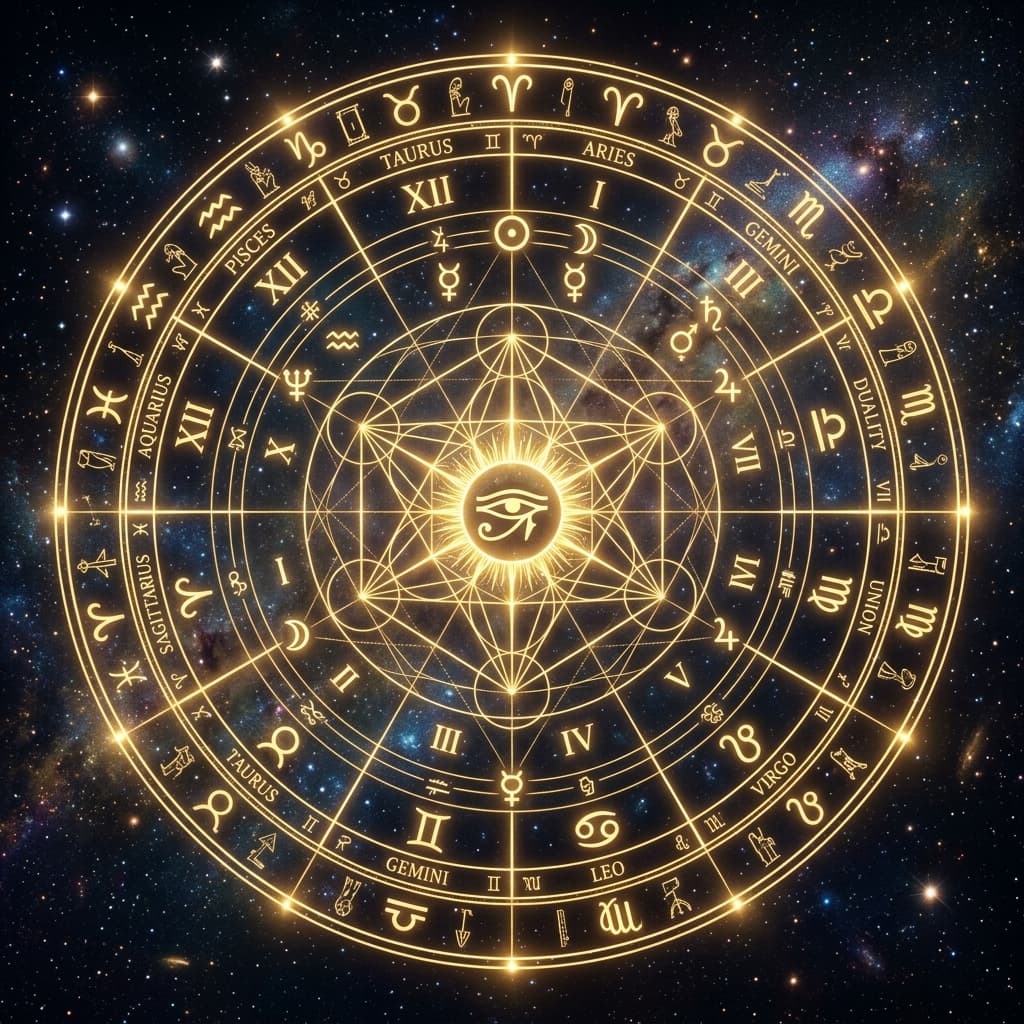
The houses in astrology are the twelve sections that divide a Birth Chart into areas of life, from the self to career. Signs show how a planet behaves, while houses show where in life that behaviour plays out. To calculate the houses, you need your birth date, birth place and as exact a birth time as possible.
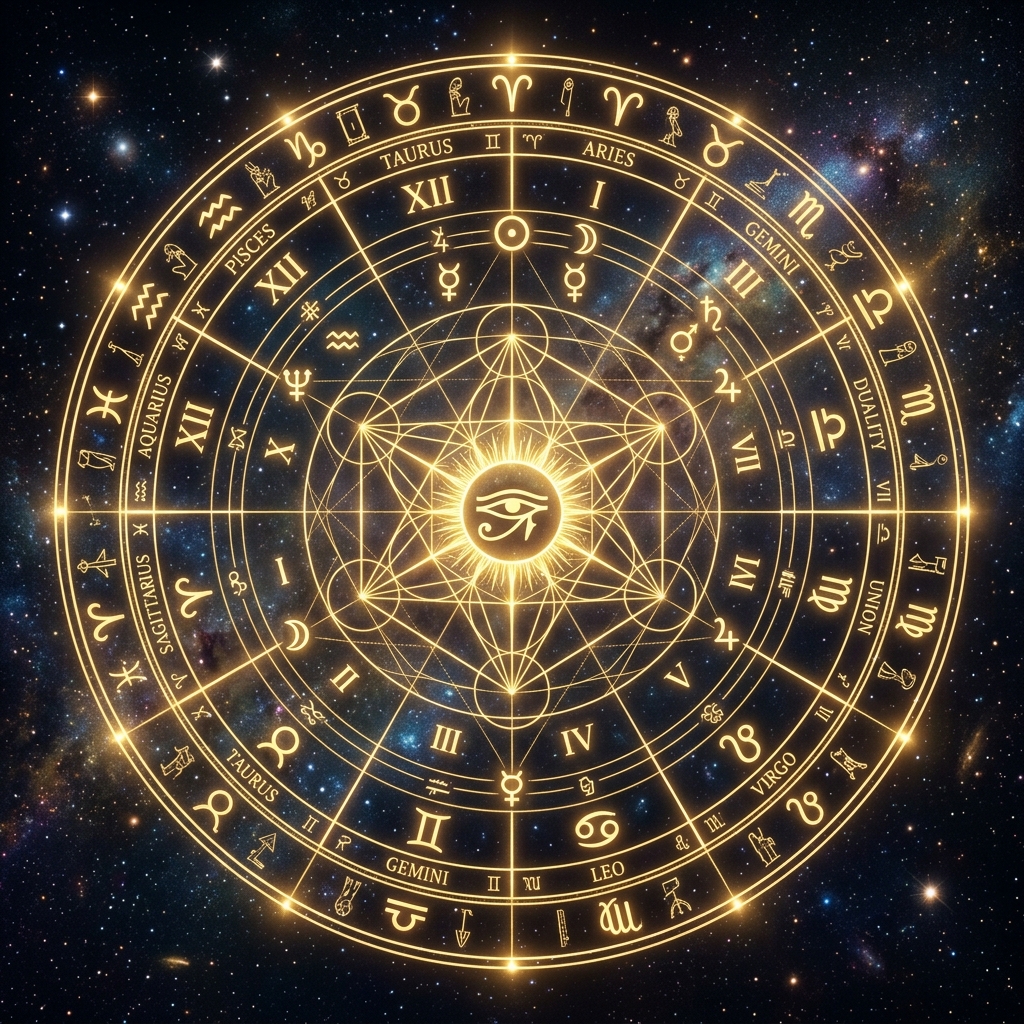
In this guide you will find what each of the twelve houses covers in a single table, see step by step how to find a house in your own chart, and read about the most common misconceptions.
What is a house in astrology, and how is it different from a sign?
A house is an area formed by dividing the sky into twelve parts as seen from your birthplace at the moment of birth. Signs are based on the Sun's yearly path and are the same for everyone; houses depend on the Earth's daily rotation and change with your birth time and place. That is why two people born on the same day can have their planets in the same signs but in different houses.
A common analogy in astrology goes like this: the planets are the actors, the signs describe how they act, and the houses describe the stage where the play takes place. Venus, for example, stands for relationships and values; Venus in Libra suggests a harmonious, graceful style, while Venus in the second house shows that style coming through in money and resources. Houses are the layer that connects the abstract information in a chart to everyday life. When reading a chart, the planet, sign and house are always weighed together.
What does each of the twelve houses cover?
The table below sums up the traditional main theme of each house and some everyday examples.
| House | Main theme | Example areas |
|---|---|---|
| 1st house | Self and appearance | First impressions, the body, approach to life |
| 2nd house | Resources and values | Money, possessions, self-worth |
| 3rd house | Communication and close surroundings | Siblings, neighbours, short trips, learning |
| 4th house | Home and roots | Family, home, the past, inner world |
| 5th house | Creativity and pleasure | Romance, children, hobbies, play |
| 6th house | Daily routine | Work routine, habits, service, looking after the body |
| 7th house | Partnerships | Marriage, business partners, open rivals |
| 8th house | Shared resources and transformation | Joint money, inheritance, intimacy, crises |
| 9th house | The search for meaning | Beliefs, philosophy, long journeys, higher education |
| 10th house | Career and public standing | Profession, reputation, goals |
| 11th house | Community and hopes | Friends, groups, plans for the future |
| 12th house | The unseen | The unconscious, solitude, retreat |
Houses are also read in pairs. The first house describes "me" and the opposite seventh house describes "the other"; the fourth house stands for private life and the tenth for public life. Opposite houses balance each other.
How do you find a house in your Birth Chart?
To find which house a planet is in, you first need the chart itself. The steps are:
- Gather your birth details. You need your birth date, place and time. The more exact the time, the more reliable the houses.
- Find the Ascendant. The sign rising on the eastern horizon at the moment of birth, the Ascendant, marks the start of the first house in most house systems.
- Count the houses in order. On the chart wheel, the houses run anticlockwise from one to twelve, starting at the Ascendant.
- Check the planet's position. A planet is in the house whose starting points it falls between.
- Note the sign on each cusp. The sign at the start of each house describes the style in which you approach that house's themes.
The rising sign changes about every two hours on average, so even a small error in the birth time can shift the Ascendant and, with it, the whole house layout. If you do not know your birth time, the signs of your planets are still correct, but the house placements should be treated as approximate.
Why do house systems give different results?
There is no single way to divide the sky into twelve houses, and astrologers have developed many house systems over the centuries. One of the most widely used today is Placidus, which divides the houses by time, so they are unequal in size and vary with the latitude of the birthplace. The further north you go, the wider some houses become and the narrower others get.
In whole sign houses, one of the oldest systems, each sign covers an entire house: the rising sign is the whole first house, the next sign is the second house, and so on. Common in Hellenistic astrology, this system has seen renewed interest in recent years. When different systems are applied to the same chart, a planet can move into a neighbouring house. That is not a mistake but a difference in perspective. Knowing which system a chart uses saves confusion when you compare it with other sources.
What does an empty house mean?
Because ten planets are spread across twelve houses, every chart has at least two empty houses, and most charts have more. An empty house does not mean nothing will happen in that area of your life. It only shows that the house does not stand out as much as one filled with planets.
To read an empty house, look at the sign on its cusp and that sign's ruling planet. If your seventh house is empty with Taurus on the cusp, for example, the position of Venus, Taurus's ruler, offers clues about how you experience partnership. Planets moving through the sky also pass through your empty houses from time to time; astrology calls these transits, and the related themes may come up during those periods. In short, an empty house is not a silent room, it simply has a different key hanging by the door. When several planets gather in one house, on the other hand, that area is read as a stage you keep returning to.
What are the most common misconceptions about houses?
The first is that houses are the same as signs. Teaching often pairs the first house with Aries and the second with Taurus, but that is an analogy; in a real chart, any sign can sit on any house cusp depending on the birth time.
The second is that the eighth and twelfth houses are "bad" houses. They do cover hard subjects such as crisis, loss and solitude, but they also stand for transformation, deep bonds and the inner world. For someone with planets there, what is described is not an inevitable fate but a relationship with a deeper layer of life.
The third is that houses can be read precisely without a birth time. Without it, the signs and aspects of your planets still mean something, but the house placements remain approximate.
The fourth is that a planet in a house must bring events in that area. A house shows where attention tends to go, not what will happen.
How can you start reading the houses in your own chart?
The easiest start is to learn your Ascendant and first house, then which houses your Sun and Moon fall in. Together these form the most talked-about layer of a chart. Then look at your busiest house; seeing which area of life keeps coming up for you is a good way to get to know your chart. On the Faltastik birth chart page, entering your birth date, time and place calculates your chart and shows the signs and houses of your planets. You can try each reading type once for free without an account.
Astrology is best used for entertainment and self-reflection, and it is not a substitute for health, legal or financial advice. To explore the general traits of each sign, continue with the horoscopes page.
