
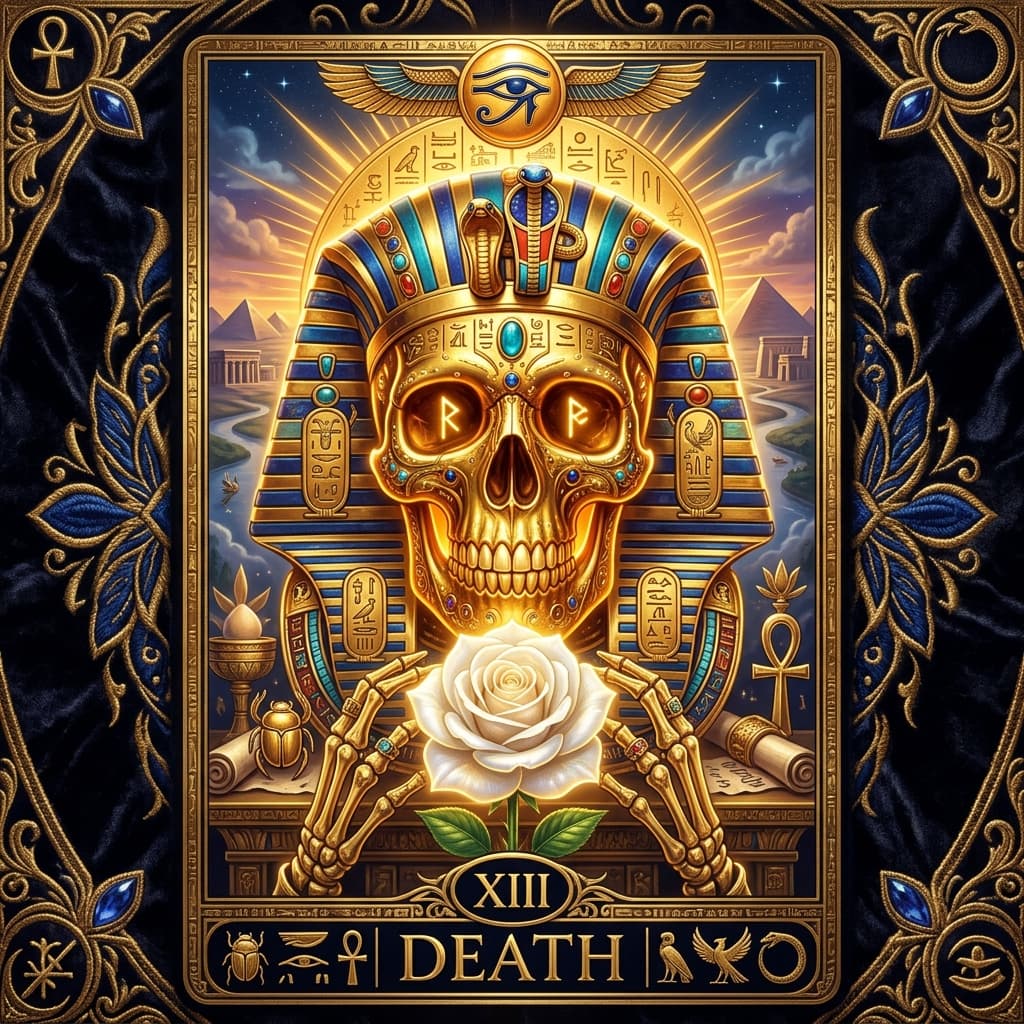
In tarot the Death card does not mean physical death; it describes the close of a chapter and transformation. Card 13 of the Major Arcana shows a habit, relationship pattern or way of thinking that no longer serves being released so something new can take its place. It looks frightening, but tradition usually reads it as "beginning after ending".
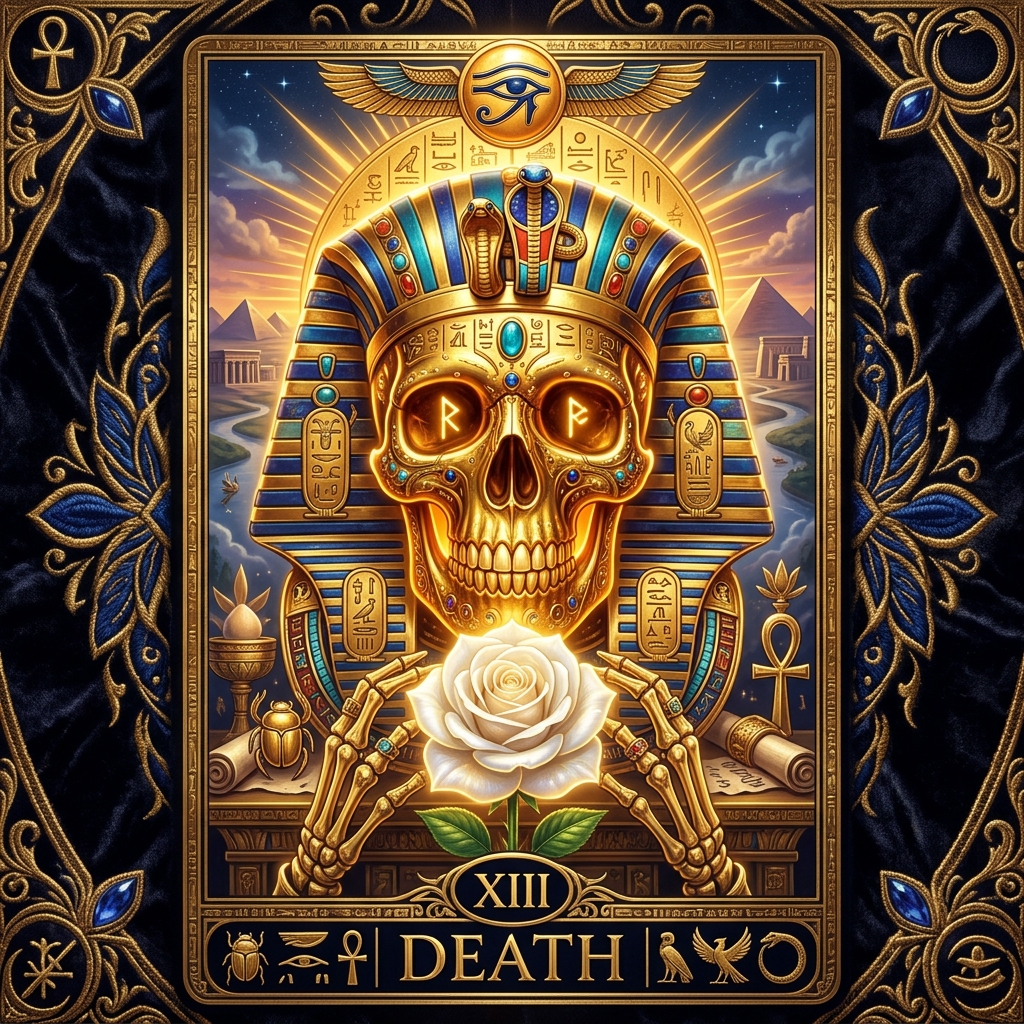
This article treats tarot as entertainment and a tool for reflection; the cards are not a substitute for medical, legal or financial advice.
Why does the Death card scare people so much?
The card's grim reputation has two sources: its name and its picture. The word "Death" is printed on it, and most decks show a skeleton. Films and television use it as a sign of disaster: the card turns over, the music changes and the audience knows something terrible is coming. Those scenes feed on the card's dramatic effect, not its meaning.
The tarot tradition sees it very differently. In older Marseille decks card 13 often has no name at all, which suggests it was seen as a passage hard to name rather than a taboo. Its place in the Major Arcana matters too: before it comes the Hanged Man, who changes perspective, and after it comes Temperance, who builds a new balance. Death is not an end point but a bridge between two stages. In the Fool's journey it is the moment the traveller sheds an identity that has grown too small, which is why the card follows a pause and precedes a recovery. You can find all of the card's meanings on the Death card page.
Which symbols appear on the card?
Read symbol by symbol, the Death card of the Rider-Waite-Smith deck turns out to be a hopeful scene rather than a frightening one. The table summarises its main symbols and their traditional readings.
| Symbol | Traditional reading |
|---|---|
| Skeleton in armour | The inevitability of change; the armour says transformation cannot be stopped |
| White horse | Purity and cleansing; the clearing side of change |
| White rose on a black banner | Beauty within an ending, and rebirth |
| A king, a cleric, a maiden and a child before it | Change touches everyone, regardless of rank, age or position |
| Sun rising between two towers | A new day after a dark period |
| A flowing river in the background | The flow of life; nothing stays where it is |
The sun in the background is the key detail: the scene shows a sunrise, not a sunset. In the Golden Dawn correspondences the card is linked to Scorpio and water, a sign associated with transformation, which pulls its tone once more from "end" towards "change".
What does the upright Death card say in a reading?
Upright, Death says a chapter of your life is closing and a new one is about to begin. Sometimes you choose the ending; sometimes it simply arrives. The core message is that it is time to let go of what no longer serves you: an old habit, a thought pattern, a role or a way of living.
In love readings the card can describe a relationship ending, but more often it shows the old form of a relationship ending as it moves into a new one: moving in together, marriage, or rebuilding on different ground after a crisis. In career readings it can mean leaving a job, closing a project or a deep change in professional identity. With money it points to dropping old spending habits and building a new routine. The tone is the same in every case: behind the closing door another one opens, but you have to let go of the first to walk through the second. That is why the card asks for acceptance more than action.
What does the reversed Death card say?
Reversed, Death usually describes resistance to change. Clinging to something that needs to end, failing to let go of a chapter that has already closed, or a transition dragging on longer than necessary are common themes. In a love reading it can mean being unable to release a relationship that has ended; in a career reading, standing still out of fear of change.
Some readers also see reversed Death as a change happening slowly and inwardly: from outside nothing seems to move, but a transformation is under way. Readers who never use reversals read the card upright every time and draw any resistance from the cards around it. Decide which approach you will use before you start. The reversed card entry explains the main ways of reading reversals.
What are the most common misconceptions about the Death card?
- "Death means someone will die." In tarot tradition the card concerns a symbolic ending and transformation, not physical death.
- "It is the worst card in the deck." It can be demanding, but it contains rebirth; many readers find the Tower or the Three of Swords more unsettling.
- "Death means sudden change." Sudden shock is more the Tower's territory. Death's change is usually slow, inevitable and natural, like the turning of seasons.
- "If Death appears, stop the reading." There is no such rule. It may be the most meaningful card on the table.
- "Death always means loss." Sometimes what is released is a burden, a fear or an identity that has become too small, and that is a gain.
- "Death fixes the future." No tarot card announces a fixed future; the cards offer a frame for thinking, and the decision stays yours.
How does the Death card read with other cards?
Death's meaning sharpens through its neighbours. With the Tower, change may be both inevitable and fast, as old structures fall in one shock. With the Star or the Sun, the ending is followed by a hopeful period. With Temperance, change moves patiently, step by step. Next to Cups it can describe an emotional closure; next to Pentacles, a material or professional transformation. Paired with the Fool, it tells a small version of the whole Major Arcana: something ends and a new journey into the unknown begins at once.
What can you ask yourself when Death appears?
Treating the card as a question rather than a warning makes the reading more useful. Ask yourself: what in my life no longer works, yet is hard to let go of? Which door has already closed while I keep waiting in front of it? Once there is room, what do I want to invite in? Writing the answers down turns the card's message into a concrete step, and revisiting them a week later shows what has shifted. You can also put the same question to an online tarot reading or explore the other cards on the tarot page.
