
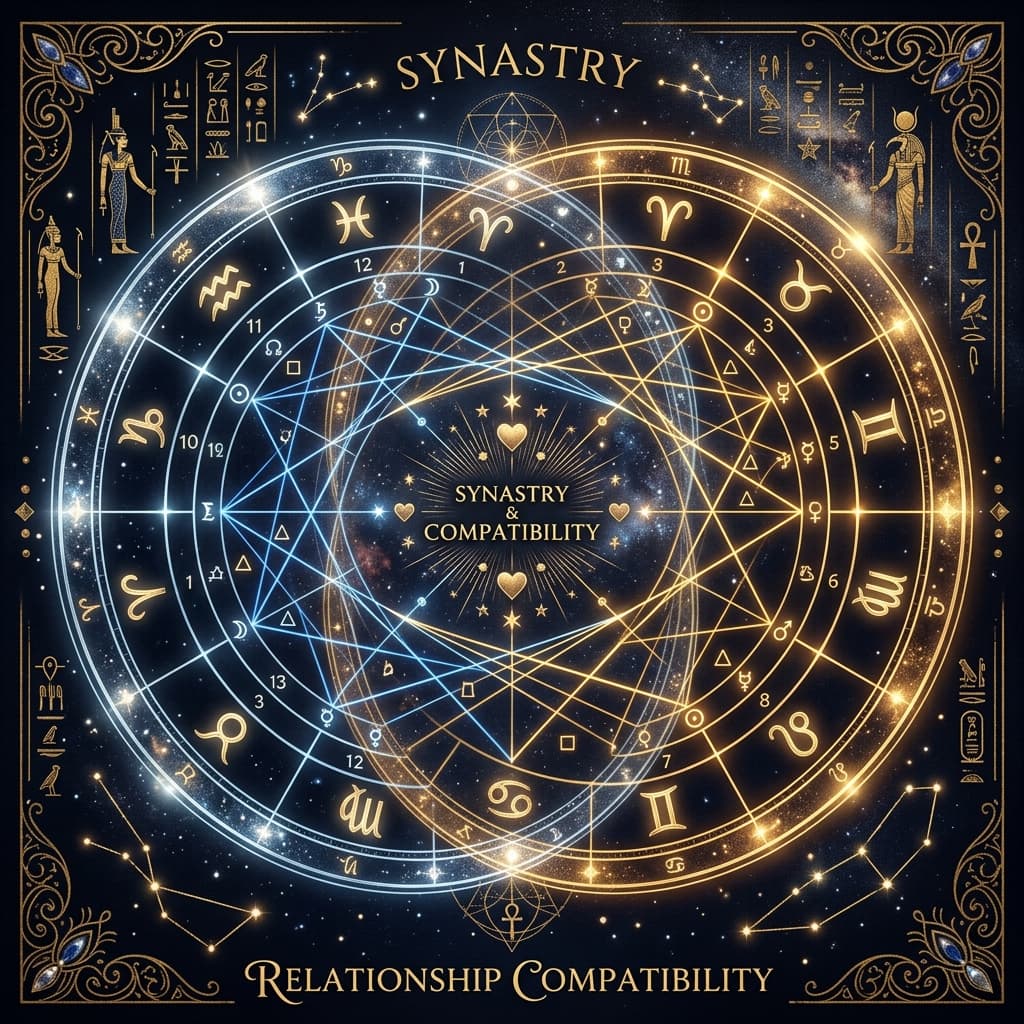
TL;DR: The real tool of relationship astrology is not a list of signs but synastry: laying two birth charts over each other and reading the aspects the planets make between them. A sun-sign compatibility table is a first impression; the emotional fabric of a relationship is described by the Moon, the attraction by Venus and Mars, and the everyday harmony by the elements and the aspects between the charts.
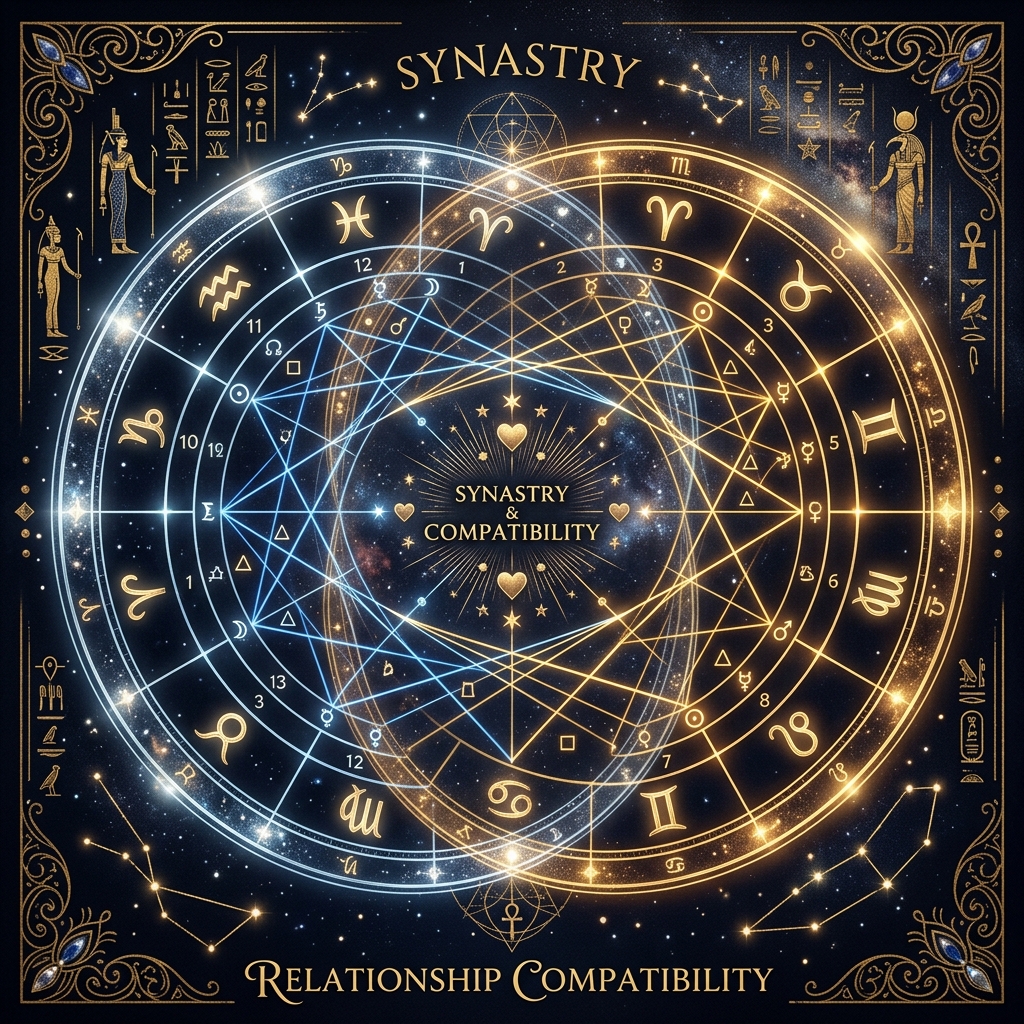
What Is Synastry?
Synastry is the branch of astrology that reads the dynamics of a relationship by comparing two people's birth charts. The word comes from a Greek root meaning "bringing the stars together." The method rests on a simple question: where does a planet in one chart land in relation to the planets in the other? If your Moon shakes hands with your partner's Venus, feelings flow easily; if your Saturn sits on their Sun, themes of seriousness, testing, and permanence enter the relationship.
This is why synastry operates on a different plane from "Do Aries and Libra get along?" Two people of the same sign can have charts that speak entirely different languages, and two signs that look incompatible on paper can produce a surprising harmony once the charts actually meet.
Why the Sun Sign Is Not Enough
The sun sign gives the keynote of a character, but a relationship is not lived under the Sun at every hour of the day. In a relationship reading, tradition looks at four points at once. The Moon describes emotional needs and the way a person feels safe; the harmony of two Moons is the quiet partnership that decides how arguments end. Venus shows the language of loving and being loved, and Mars the style of wanting and acting. The rising sign, too, is the key to first impressions and everyday manner; two compatible ascendants ease the rhythm inside a shared home.
A practical order of reading goes like this: first the two Moons, then the mutual positions of Venus and Mars, then the Sun and the Ascendant. This four-part reading gives a depth that no one-line compatibility table can offer.
The Ground of the Elements
Before descending into chart-to-chart detail, the elements offer a rough ground. Fire and air signs feed each other: one is the spark, the other the wind. Earth and water hold each other in a similar way: one is the vessel, the other what fills it. Two people of the same element understand each other without effort, though the relationship can flatten into routine over time; opposite elements produce friction at first but complete what the other lacks. Elemental harmony is not a verdict, only a preliminary reading of where the relationship flows on its own.
Aspects Between Charts
The language of synastry is aspects: the geometric distances between planets in the two charts. Flowing aspects show the veins of the relationship where things move easily; hard aspects mark the points of growth. Relationships carrying hard aspects are not bad relationships; the engine of most long-lasting bonds is precisely these frictional contacts.
| Aspect | Distance | Meaning in a Relationship |
|---|---|---|
| Conjunction | 0° | Two planets on the same point; strong, intense contact, sweet or demanding depending on the planet |
| Sextile | 60° | A friendly flow; a door of opportunity that opens with effort |
| Square | 90° | Friction and a point of growth; the address of the recurring argument |
| Trine | 120° | Effortless harmony; the side of the relationship that flows by itself |
| Opposition | 180° | Attraction and tension together; the mirror effect, the search for balance |
In the reading, the pair of planets matters as much as the aspect. A Moon-Venus trine furnishes a tender domestic climate; a Mars-Mars square turns energy into a contest; and Saturn touching the other chart's personal planets brings a sense of responsibility that is both burden and glue.
The Role of the Seventh House
The 7th house, which describes partnerships in a Birth Chart, holds a special place in synastry. If your partner's planets fall into your 7th house, that person enters your life wearing the archetype of the "partner"; the relationship pulls itself toward formality, building something together, long-term alliance. The same gaze reads the 5th house for romance and the 4th for the theme of home and family.
A Sample Reading
Say a couple's charts show the Moons in trine, Venus opposing Mars, and Saturn conjunct the partner's Sun. The trined Moons furnish the inside of the home with a silent agreement: each senses what wounds the other and what mends them. The Venus-Mars opposition keeps the attraction alive but repeatedly throws the timing of desire out of step. The Saturn conjunction brings seriousness into the relationship early; the couple either carries that weight by maturing, or experiences it as coldness. Synastry reads these three layers not in one sentence, but together.
A Hard Aspect Is Not Grounds for Separation
The most common misunderstanding about synastry is the belief that hard aspects condemn a relationship. Tradition says the opposite: charts with no friction at all tend to build relationships that leave no trace. A hard aspect is a signpost showing where the work belongs. The intention, maturity, and effort of two people stand above the map; synastry hands over a compass, and the couple draws the route.
Frequently Asked Questions
What do you need for a synastry reading?
The birth date, time, and place of both people. Without a birth time, the Moon's degree and the houses stay uncertain and the reading grows coarser, but elements and planetary aspects can still be read.
Are sun-sign compatibility tables simply wrong?
Not wrong, incomplete. A table built on sun signs gives a first impression; the fabric of the relationship is completed by the Moon, Venus, Mars, and the aspects between the charts.
Is a composite chart the same as synastry?
No. Synastry compares two charts; a composite chart uses their midpoints to produce a third chart belonging to the relationship itself. The two methods complete each other.
You can look up your own sign's compatibility profile on our zodiac compatibility page, deepen the concepts of synastry with our relationship astrology guide, and try a reading that lays two charts side by side with the Faltastik compatibility analysis. If you are curious about the fortune-telling side of relationships, our relationship reading page is waiting as well.
